PELCO 6870R5481AA Ethernet Card Pci Video Receiver 4-PORT 8100
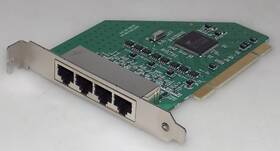
( Brand: Pelco ), ( Manufacturer Part Number: 6870R5481AA ), ( Part Type: Video Card Receiver ), ( Country Of Origin: United States )
Review PELCO 4-port Ethernet Card Pci Series Video Receiver
The **Pelco 6870R5481AA 4-Port Ethernet Card (PCI 8100 Video Receiver)** is a high-performance, enterprise-grade networking solution designed to seamlessly integrate analog and digital video surveillance systems into modern IP-based infrastructures. Engineered for reliability and scalability, this PCI-based Ethernet card serves as a critical bridge between traditional analog cameras and high-definition IP networks, enabling smooth migration from legacy systems to advanced digital platforms without compromising performance or compatibility. With its robust **PCI 8100 Video Receiver** architecture, this card supports up to four simultaneous analog video inputs (compatible with standard PAL or NTSC signals) while converting them into high-quality digital streams via Ethernet, ensuring minimal latency and optimal video fidelity. Ideal for commercial, industrial, or municipal applications, the 6870R5481AA is built to handle demanding environments, offering robust protection against electrical surges and environmental fluctuations, making it a dependable choice for mission-critical surveillance deployments. Its compact yet powerful design allows for easy installation within server racks or network infrastructure, while its compatibility with Pelco s extensive range of video management software ensures seamless integration with existing security ecosystems. Whether deployed in large-scale enterprise networks, government facilities, or critical infrastructure, this Ethernet card delivers the flexibility and performance needed to future-proof surveillance systems while maintaining the reliability of analog technology.
### **Pelco 6870R5481AA (4-Port Ethernet PCI 8100 Video Receiver) Pros and Cons**
#### **Pros:**1. **Compatibility with Pelco Systems** This card is designed specifically for Pelco s 8100 series video receivers, ensuring seamless integration with existing Pelco infrastructure. It supports analog CCTV systems that use Pelco s proprietary protocols, making it ideal for legacy setups.
2. **Ethernet-Based Video Transmission** The card converts analog video signals into Ethernet packets, allowing for IP-based monitoring over a network. This eliminates the need for traditional coaxial cabling in some scenarios, reducing clutter and enabling remote viewing via software like Pelco Spectrum or third-party solutions.
3. **Scalability with Additional Ports** The 4-port design allows for the connection of multiple analog cameras or devices to a single PCI slot, making it efficient for small to medium-sized installations where multiple inputs need to be digitized.
4. **Low-Latency Performance** Pelco s proprietary encoding ensures minimal delay in video transmission, which is critical for real-time monitoring applications like security surveillance.
5. **Support for Pelco s Software Ecosystem** Works natively with Pelco s management software (e.g., Pelco Spectrum, Spectrum Pro), providing features like remote access, recording, and playback without requiring third-party middleware for basic functions.
6. **Reliable Brand Reputation** Pelco is a well-established manufacturer in the security industry, known for durable hardware and technical support, particularly for enterprise-level systems.
7. **Future-Proofing (to an extent)** While primarily analog-to-IP, the card can serve as a bridge for older analog systems transitioning toward IP networks, delaying the need for a full-scale upgrade.
---
#### **Cons:**1. **Limited to Pelco Ecosystem** This card is **not compatible** with non-Pelco analog cameras or third-party IP systems without additional gateways or converters. If you re using cameras from brands like Hikvision, Axis, or Dahua, you ll need separate encoders or a different solution.
2. **Analog Dependency** The card itself does not encode IP cameras; it only converts analog signals (e.g., from Pelco DVRs or cameras) into Ethernet. If your entire system is analog, this card is useful, but if you re starting fresh with IP cameras, you d need a different approach (e.g., IP encoders or standalone IP cameras).
3. **PCI Slot Requirement** The card requires a free PCI slot in your server or NVR, which may not be available in modern systems that favor USB, Thunderbolt, or onboard Ethernet. This could limit its use in newer hardware.
4. **No Built-in Recording** The card only transmits video over the network; it does not include local recording functionality. You ll still need a Pelco DVR or third-party recorder to store footage.
5. **Potential Latency in Complex Networks** While low-latency for Pelco systems, performance may degrade in large or congested networks, especially if multiple high-resolution analog feeds are being transmitted simultaneously.
6. **Outdated Technology for Modern Needs** For new installations, IP cameras with built-in encoding (e.g., ONVIF-compliant devices) are often more cost-effective and flexible than analog-to-IP conversion cards. This card is better suited for upgrading existing analog setups rather than building new ones.
7. **Limited Software Flexibility** While it works with Pelco s software, it lacks integration with popular open-source or third-party platforms (e.g., Blue Iris, iSpy, or VLC) without workarounds. This can be restrictive for users who prefer custom solutions.
8. **Hardware Obsolescence Risk** Pelco s focus has shifted toward IP-centric solutions, and support for legacy analog hardware may decline over time. Future firmware updates or compatibility issues could arise.
---
### **Conclusion:**The **Pelco 6870R5481AA** is a **niche but useful tool** for upgrading **existing Pelco analog systems** to IP networks. It excels in environments where:
- You already have Pelco-compatible analog cameras/DVRs.
- You need to extend network-based monitoring without replacing all hardware.
- You prioritize Pelco s ecosystem and proprietary features.
However, for **new installations** or systems requiring **multi-brand compatibility**, **IP cameras with ONVIF support** or **third-party encoders** (e.g., from Axis, Hikvision, or Reolink) are generally more versatile and future-proof. The card s limitations in flexibility, hardware requirements, and ecosystem lock-in make it less ideal for modern, open-platform security setups.
---
### **Recommendation:** - **Buy if:**- You have an **existing Pelco analog system** and want to transition to networked monitoring without replacing all cameras.
- You re working within a **Pelco-centric environment** (e.g., Pelco DVRs, Spectrum software) and need to digitize analog feeds.
- You lack the budget for a full IP camera upgrade and want a cost-effective bridge solution.
- **Avoid if:**- You re **starting a new security system** from scratch (IP cameras are more efficient).
- Your cameras are **non-Pelco** (this card won t work without additional converters).
- Your server lacks a **free PCI slot** (modern systems may not support it).
- You need **open-platform compatibility** (e.g., integration with Blue Iris, VLC, or other non-Pelco software).
**Alternative Considerations:**- For **analog-to-IP conversion**, explore **third-party encoders** (e.g., Axis Q6800 series) that support ONVIF and offer broader compatibility.
- For **new IP systems**, prioritize **ONVIF-compliant cameras** (e.g., Hikvision, Dahua, or Axis) with built-in encoding for greater flexibility.
- If budget allows, a **Pelco Spectrum-compatible NVR** with hybrid support (analog IP) may be a more future-proof investment.
Details:
Pelco 6870R5481AA 4-Port Ethernet Card PCI PELCO 8100 SERIES VIDEO RECEIVER, WORKING REMOVAL FROM AN PLEASE SEE PICTURES AS THEY ARE PART OF THE. This will vary.
part #: 6870r5481aa prices
- $199.99-$764.99
specifications securityretaili:
- brand: Pelco
- mpn: 6870r5481aa
- part type: Video Card Receiver
- country of origin: United States
payments securityretaili:
- credit card: Visa
- wallet: Apple-pay
- other
offer securityretaili:
- quantity: 1
- options: Ship-to-home
- availability: In Stock
- best offers: True
- sold: 0
- started: April 15, 2026
shipping securityretaili:
- class: Standard, Economy, Expedited
- cost: $8.10
- transit: 3-8 Days
- type: Calculated
- service: USPS Ground Advantage, FedEx Ground Economy, USPS Priority Mail
- carrier: USPS, FedEx
general securityretaili:
- Retail Services > Security Surveillance > Camera Video Systems
- condition: Used
returns securityretaili:
- policy: Returns Accepted
- method: Money back
- paid by: Buyer
- time: 30 Days
seller securityretaili:
- rating: 100.0%
- city: Binghamton, New York
- # reviews: 1465
Pelco 6870R5481AA Is Similar To:
- 0700880010020 Pelco Video Distribution Amplifier (25.6% similar) No connecting cables, cameras or other accessories included. It powers and operates normally. Sold as pictured. Pelco DA104DT 1X4 video distribution amplifier in good used condition, recently removed from a working installation. Cosmetic condition is good with minor signs of normal use...(June 28th, 2018)
- 13.02 Pelco Digital Video Recorder (38.8% similar) Sony camera and a keypad entry device are being sold separately. Tested and works great. Please with any questions...(November 12th, 2017)
- 3327-20001 Pelco Xmux32 32 Port (20% similar) Standardized return guidelines create a more consistent experience for both buying and selling by eliminating the uncertainty of whats acceptable to what isn't. Accessories such as cords and remotes. The shipping charges are shown in listing. All packaging such as boxes, bags, and tags. Certificates...(December 8th, 2017)
- 35401v1c2d0s Pelco Digital Video Recorder (36.4% similar) 6GHZ processor 2GB ram 1TB hard drive see pictures for details other features. Dual core item has been tested and works. Pelco digital video recorder integral tech D's press E216799 item is used...(May 3rd, 2017)
- 3925-5100-pend Cohu Hd Ptz Idome Video Security Camera Pelco Base (28.4% similar) Multi-manufacturer protocol is standard featuring the exclusive Chou multi-protocol control firmware. In addition to the clear image, this option also allows system designer specify lighter and less-rigid poles, or utilize existing bridge signs traffic lights. Dome drive, with up. Built for the not-...(May 19th, 2018)
- 3925-5100-pole Cohu Hd Ptz Idome Video Security Camera Pelco Base (28.4% similar) Day night camera technology automatic switching assures vivid color images during daylight, and high sensitivity monochrome after dark. The 3920 series has been tested to withstand 120 mph 193 km winds with a 20 gust factor no damage camera system. 1 accuracy, provides continuous rotation and up to ...(May 18th, 2018)
- 700880280133 Pelco Ver Video Encoder Endura Series (30.3% similar) The listing is for docking station alone, power supply 12V 4a not included. Deep, major, detailed cleaning is not done unless noted above. This item works great but does have some scratches as shown. This is a used item and will have signs of use. Items are, cleaned wiped down before listing and ...(May 18th, 2018)
- 9d4kvuqo16362 Pelco Dvr Digital Video (30.2% similar) The DVR does have a very small scratch across top barely visible to eye. Both units are in good working order. They came from a university setting. The expansion unit is in perfect shape...(November 28th, 2017)
- C2433m-c Pelco Df8 Series Pendant (31.4% similar) This item is new open box and guaranteed working. The item exteriors may have minor scratches, scuffs, dents, cracks, nicks, etc. Item is offered with a 30-DAY money back guarantee. No manuals, cords, cables, batteries, battery charger, external power supply, software, or instructions are included ...(January 27th, 2018)
- Cc3300-2 Pelco Color Video Camera Security Surveillance Tv Lens (25.8% similar) Shelf- blue box...(May 15th, 2018)
- Cc3700s-2 Pelco Genuine Series Digital Ccd Color Camera (33.9% similar) Comports specializing in new and used electronics for over twenty five years. Consumer electronics PCs laptops netbooks monitors computer processors networking equipment servers switches Cisco products telephones systems printers print accessories. Please see the below paragraph for warranty on this...(November 7th, 2018)
