EAGLE EYE BR324 Networks Security Camera Video Bridge Power /CMVR-324 Supply
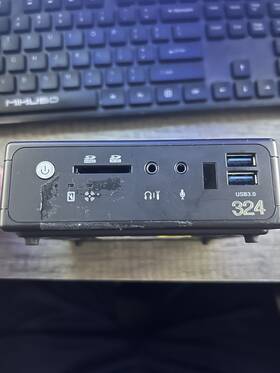
( Brand: Eagle Eye ), ( Manufacturer Part Number: BR324 ), ( Part Type: Security Video Camera Supply )
Review EAGLE EYE Networks /cmvr-324 Security Camera Video Bridge No Power Supply
The **Eagle BR324 Networks/CMVR-324 Security Camera Video Bridge Power Supply** is a high-performance, industrial-grade power adapter meticulously engineered to deliver reliable and consistent electrical energy to the CMVR-324 video bridge, ensuring seamless connectivity and optimal performance in demanding surveillance environments. Designed with precision and durability in mind, this power supply unit is built to withstand the rigors of continuous operation, providing a stable 12V DC output at a robust 2.5A current capacity, which is essential for maintaining the integrity of video transmission, network connectivity, and overall system functionality. Its compact yet sturdy construction allows for easy integration into existing security setups, whether installed in outdoor enclosures, indoor control rooms, or distributed network hubs, making it an ideal solution for both commercial and industrial applications.
The CMVR-324 power supply is engineered with advanced protection mechanisms to safeguard against voltage spikes, overloads, and short circuits, ensuring longevity and reliability even in harsh conditions. Its high-efficiency design minimizes heat dissipation, reducing the risk of overheating and extending the lifespan of the connected equipment. The unit is compatible with a wide range of security cameras and video bridges, making it a versatile choice for upgrading or maintaining surveillance systems that rely on the CMVR-324 for seamless IP video transmission. Whether deployed in a high-security facility, a large-scale retail environment, or a critical infrastructure site, this power supply unit guarantees uninterrupted power delivery, enabling clear, high-resolution video streaming without interruption.
Built to meet stringent industry standards, the Eagle BR324 Networks/CMVR-324 power supply is constructed with high-quality materials, including insulated and flame-retardant components, ensuring compliance with safety regulations and operational reliability. Its robust mounting options, such as screw terminals or plug-and-play connectors, simplify installation and maintenance, allowing technicians to quickly replace or reconfigure the unit as needed. Additionally, the power supply s efficient power conversion technology helps reduce energy consumption, contributing to cost savings and environmental sustainability. For security professionals and system integrators seeking a dependable and high-performance power solution for their CMVR-324 video bridges, this unit represents a critical component in achieving a robust, future-proof surveillance infrastructure.
The **Eagle BR324 Networks/CMVR-324 Security Camera Video Bridge Power Supply** is a device designed to convert analog CCTV cameras into IP-compatible cameras, allowing them to integrate with modern network video recording (NVR) systems. Below is a detailed breakdown of its pros and cons, followed by a conclusion and recommendation.
---
### **Pros**
1. **Compatibility with Analog Cameras**
The BR324 bridges the gap between older analog CCTV cameras (using BNC connections) and IP networks, enabling them to work with modern NVRs, software like Blue Iris, or even smartphone apps. This is particularly useful for users who already have analog cameras but want to transition to network-based monitoring without replacing their entire system.
2. **Cost-Effective Upgrade**
For users with existing analog cameras, purchasing a video bridge like the BR324 is often cheaper than buying new IP cameras. It allows them to leverage their current hardware while adding network functionality.
3. **Easy Installation**
The device is relatively straightforward to set up. It connects to the camera via BNC, to the network via Ethernet, and requires a power supply (included or separate). Most users with basic technical knowledge can install it without professional help.
4. **Supports Multiple Protocols**
The BR324 typically supports protocols like RTSP, ONVIF, and HTTP, making it compatible with a wide range of NVRs and surveillance software. This flexibility ensures integration with popular platforms like Synology, QNAP, or third-party apps.
5. **No Need for Camera Replacement**
Since the device converts analog signals to IP, users can retain their existing cameras, saving money and avoiding the hassle of disposing of or repurposing old equipment.
6. **Remote Access and Monitoring**
Once connected to a network, the cameras can be accessed remotely via a web browser or mobile app, providing real-time monitoring and playback capabilities.
7. **Scalability**
The BR324 can be used with multiple cameras (though typically one per bridge), allowing users to gradually upgrade their system as needed. Additional bridges can be added to support more cameras.
8. **Low Latency**
The device is designed to minimize delay in video transmission, ensuring smooth playback and real-time monitoring for most applications.
---
### **Cons**
1. **Limited Resolution and Performance**
Analog cameras generally have lower resolution (e.g., 720p or 1080p) compared to modern IP cameras, which may offer 4K or higher. The BR324 does not improve the camera s native resolution; it only enables network transmission. If high-resolution footage is critical, this limitation may be a drawback.
2. **Potential for Signal Degradation**
Analog signals can be susceptible to interference or degradation over long cable runs, especially if the cables are old or poorly shielded. The BR324 does not address these issues; it only converts the signal to IP format. Users with long cable runs may experience reduced image quality.
3. **Dependence on Existing Camera Quality**
The performance of the system is entirely dependent on the quality of the analog cameras being used. If the cameras are outdated or low-quality, the output will reflect that, regardless of the bridge s capabilities.
4. **Power Supply Requirements**
While the BR324 includes a power supply, some users may need to purchase an additional one if the included unit is incompatible with their setup. Ensure the power supply matches the device s requirements (e.g., voltage and wattage).
5. **Network Bandwidth Limitations**
Analog cameras converted via a bridge may consume more bandwidth than native IP cameras, especially if multiple cameras are being streamed simultaneously. Users with limited internet bandwidth may experience buffering or lag.
6. **Compatibility Issues with Some NVRs**
While the BR324 supports common protocols, there may be occasional compatibility issues with certain NVR software or firmware versions. Users should test the device with their specific NVR before committing to a purchase.
7. **No Built-in Storage**
The BR324 itself does not store footage; it requires an external NVR, DVR, or cloud storage solution. Users must ensure they have a separate recording device or subscription for storage.
8. **Potential for Latency in Motion Detection**
Some users report slight delays in motion detection or alerts when using analog cameras with a bridge, as the signal conversion process may introduce minor delays.
9. **Limited Advanced Features**
Modern IP cameras often include advanced features like AI-based object detection, facial recognition, or smart alerts. The BR324 does not add these capabilities; users are limited to the features available on their analog cameras.
10. **Warranty and Support Considerations**
As a third-party device, the BR324 may have limited warranty coverage or support compared to branded IP cameras. Users should research the manufacturer s support policies before purchasing.
---
### **Conclusion**
The **Eagle BR324 Networks/CMVR-324 Security Camera Video Bridge Power Supply** is a practical and cost-effective solution for users who want to integrate their existing analog cameras into a networked surveillance system. It excels in scenarios where replacing cameras is not feasible or desirable, offering a simple way to add IP functionality without significant upfront costs.
However, its limitations such as reliance on analog camera quality, potential signal degradation, and lack of advanced features make it less ideal for users seeking high-resolution, feature-rich, or future-proof surveillance systems. If your primary goal is to modernize an existing analog setup with minimal investment, the BR324 is a viable choice. But if you require cutting-edge features, high resolution, or plan to expand your system significantly, investing in native IP cameras may be more beneficial in the long run.
---
### **Recommendation**
- **Buy the BR324 if:**- You have existing analog cameras that you want to repurpose without replacing them.
- You are on a budget and need a cost-effective way to add network functionality.
- Your surveillance needs are basic (e.g., monitoring a home or small business with no need for high-resolution or advanced features).
- You are comfortable with the limitations of analog camera quality and potential signal issues.
- **Avoid the BR324 if:**- You require high-resolution (e.g., 4K) or advanced features like AI detection.
- Your analog cameras are old or prone to signal interference, as the bridge will not improve their performance.
- You plan to scale your system significantly in the future, as native IP cameras may be more flexible and future-proof.
- You need seamless integration with proprietary NVR systems that may not fully support the BR324.
- **Alternative Considerations:**- If you are open to replacing cameras, consider investing in **native IP cameras** (e.g., from brands like Hikvision, Dahua, or Axis) for better resolution, features, and long-term reliability.
- If you want to keep some analog cameras but also add new IP cameras, a hybrid NVR that supports both analog and IP inputs may be a better long-term solution.
- For users with very old analog systems, upgrading to **HD-TVI or AHD cameras** (which offer higher resolution than traditional analog) might be a middle-ground option before fully transitioning to IP.
Details:
No power supply. Removed from office environment. Haven accessed internals to test.
part #: br324 price
- $100.00
specifications securityretaili:
- brand: Eagle Eye
- mpn: Br324
- part type: Security Video Camera Supply
seller securityretaili:
- city: Austin, Texas
- rating: 100.0%
- # reviews: 17
payments securityretaili:
- other
- wallet: Google-pay
- credit card: Visa
shipping securityretaili:
- type: Calculated
- service: USPS Ground Advantage
- class: Standard
- transit: 7-11 Days
- carrier: USPS
- cost: $9.81
returns securityretaili:
- policy: No Returns
general securityretaili:
- condition: Used
- Retail Services > Security Surveillance > Camera Video Systems
offer securityretaili:
- options: Ship-to-home
- availability: In Stock
- started: March 6, 2026
- sold: 0
- best offers: True
- quantity: 1
Eagle Eye BR324 Is Similar To:
- Pt-100 Eagle Pan Tilt Systems Wall Bracket Indoor Security Camera Head (45.6% similar) Always check the postmark. My goal is to give you the best buying experience have had and I do strive satisfy buyers so any issue kindly contact me. Packaging package as I would expect a parcel shipped to me. Unless indicated otherwise...(April 19th, 2018)
- Pt-ps-4 Eagle Pan Tilt Power Supply (38.6% similar) Free USA 48 shipping. Good cosmetics. As pictured...(June 30th, 2018)
- Trusttag Et-l052 Ink Security Tags With Pins Am Eagle Star Logo Normal Lock (32.5% similar) Part #: trust tag ET-L052 for sale...(August 1st, 2023)
- Eagle Eye Networks Een-br401-53340 401 Bridge cmvr Cloud Managed Video Recorder (40.5% similar) Eagle Eye networks 401 bridge/cmvr EEN-BR401-53340 cloud managed video recorder. We'll show them in the photos. There are a couple of minor dents on the rear upper corners enclosure, but they're in expended part where there no electronics, and not too serious. This is your chance to save big-time so...(November 13th, 2024)
- Eagle Eye Networks Een-br401-23241 401 Bridge cmvr Cloud Managed Video Recorder (43% similar) Eagle Eye networks 401 bridge/cmvr EEN-BR401-23241 cloud managed video recorder, please see pictures for details, what you is you're getting...(April 28th, 2025)
- Eagle Eye Networks Een-br401-44754 401 Bridge cmvr Video Security System Bundle (49.4% similar) The 401 model provides advanced features and capabilities to give you peace of mind deter potential security threats. The Eagle Eye networks 401 bridge/cmvr EEN-BR401-44754 video security system bundle offers a comprehensive solution for security and surveillance in retail industrial settings...(October 16th, 2025)
