MICROFIRST GPI-1616 General Controller Port
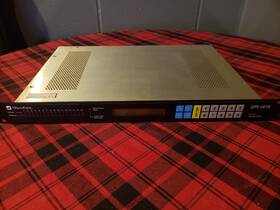
( Brand: Microfirst ), ( Manufacturer Part Number: GPI-1616 ), ( Part Type: Controller ), ( Bin: B )
Review MICROFIRST General Purpose Controller Port Model
The **MicroFirst GPI-1616 General Controller** is a versatile and high-performance industrial-grade device designed to streamline automation, control, and data acquisition tasks in a wide range of applications. Engineered with precision and reliability in mind, this compact yet powerful controller integrates seamlessly into modern industrial, commercial, and IoT environments, offering a robust solution for managing up to 16 digital I/O ports with exceptional flexibility. Built on a solid foundation of advanced microcontroller technology, the GPI-1616 delivers real-time monitoring, control, and communication capabilities, making it an ideal choice for applications requiring precise timing, high-speed data processing, and seamless integration with other systems. Whether deployed in manufacturing plants, smart buildings, energy management systems, or custom automation setups, this controller excels in handling complex logic operations, event-driven responses, and scalable expansion through its modular design.
At its core, the **GPI-1616** features a **16-channel digital I/O interface**, combining both input and output capabilities in a single, space-efficient unit. Each port is fully isolated and protected against electrical noise, voltage spikes, and environmental interference, ensuring stable and dependable operation even in harsh industrial conditions. The controller supports a variety of signaling standards, including TTL, NPN/PNP transistor outputs, and relay-driven outputs, allowing it to interface directly with sensors, actuators, PLCs, and other peripheral devices without the need for additional conversion hardware. Its **high-speed switching capability** with response times measured in microseconds makes it well-suited for applications demanding rapid actuation, such as motor control, conveyor systems, or real-time process monitoring.
Beyond its core I/O functionality, the **GPI-1616** stands out for its **advanced programming and communication features**, enabling users to implement custom logic, timers, counters, and event-based triggers with ease. The device is equipped with **built-in ladder logic support**, allowing engineers familiar with PLC programming to deploy familiar scripting methods while benefiting from the controller s lightweight yet powerful processing engine. Additionally, it supports **Modbus RTU/TCP, Ethernet/IP, and serial communication protocols**, facilitating effortless integration with SCADA systems, cloud platforms, and other industrial networks. For developers, the controller provides **open APIs and SDKs** in multiple programming languages, including C, Python, and JavaScript, empowering custom firmware development and tailored automation solutions.
Designed with **industrial durability** in mind, the **GPI-1616** is housed in a robust, compact enclosure that meets stringent environmental standards, including **wide-temperature operation (typically -40 C to 85 C)**, resistance to vibration and shock, and protection against dust and moisture (IP65-rated models available). Its **low-power consumption** ensures efficient operation in battery-powered or energy-sensitive applications, while its **hot-swappable design** allows for easy replacement of modules without disrupting ongoing processes. The controller s **LED indicators** provide real-time status monitoring, and its **configurable via web interface, serial console, or programming software** simplifies setup, debugging, and maintenance tasks.
Whether deployed as a standalone controller or as part of a larger automation network, the **MicroFirst GPI-1616 General Controller** delivers a **scalable, high-performance solution** for modern control challenges. Its **versatility, reliability, and ease of integration** make it an excellent choice for engineers, system integrators, and IoT developers seeking a cost-effective yet powerful tool to enhance productivity, reduce downtime, and optimize operational efficiency. With its blend of **industrial-grade robustness, flexible programming options, and seamless communication protocols**, the GPI-1616 is not just a controller it s a foundational component for building smarter, more responsive automation systems.
### **Pros and Cons of buying a MicroFirst GPI-1616 General Controller (16-Port)**
#### **Pros:**1. **Versatile Port Configuration** The GPI-1616 offers a mix of digital, analog, and relay outputs, making it suitable for a wide range of applications, including industrial control, automation, and monitoring systems. The ability to configure ports as inputs or outputs (with some limitations) enhances flexibility.
2. **Compact and Space-Efficient Design** As a 16-port controller, it is more compact than larger systems, making it ideal for installations where space is limited. This can be particularly useful in small control panels, embedded systems, or retrofitting existing setups.
3. **Modular and Expandable** The device supports expansion via additional modules or interfaces, allowing users to integrate it into larger systems if needed. This scalability is beneficial for projects that may evolve over time.
4. **Compatibility with Common Protocols** The GPI-1616 typically supports standard communication protocols such as Modbus RTU/TCP, which are widely used in industrial environments. This ensures compatibility with existing SCADA systems, PLCs, or data logging software.
5. **Cost-Effective for Small to Medium Applications** Compared to larger or more specialized controllers, the GPI-1616 offers a balanced price point for applications requiring 16 discrete or analog I/O points without the need for a full PLC.
6. **Easy Integration with PLCs or DCS** It can serve as a peripheral device for larger control systems, allowing for distributed I/O without overcomplicating the main control architecture.
7. **Reliability for Basic Automation Tasks** For non-critical or low-to-medium complexity applications (e.g., lighting control, simple process monitoring, or small-scale automation), the GPI-1616 provides a dependable solution with minimal maintenance requirements.
8. **Local and Remote Monitoring Capabilities** Many models in this series support both local (via terminals) and remote (via Ethernet or serial) monitoring, making it useful for applications where real-time data access is required.
9. **Low Power Consumption** Designed for efficiency, the device typically consumes minimal power, which is advantageous for battery-powered or energy-sensitive applications.
10. **User-Friendly Configuration** The setup process is often straightforward, with software tools or web interfaces that simplify programming and parameter adjustments for non-experts.
---
#### **Cons:**1. **Limited Advanced Features** Unlike full-fledged PLCs, the GPI-1616 lacks built-in advanced features such as complex logic processing, high-speed timing, or extensive math functions. Users requiring sophisticated control algorithms may need to rely on external PLCs or programming.
2. **Port Configuration Restrictions** While the device offers flexibility, some ports may not be freely configurable as both inputs and outputs simultaneously. For example, analog inputs and outputs may have separate channels, limiting simultaneous use of all ports in mixed modes.
3. **Scalability Limitations** For applications requiring more than 16 I/O points, additional modules or separate controllers may be necessary, increasing complexity and cost. This can be cumbersome for large-scale systems.
4. **Dependence on External Power Supplies** The device typically requires an external power source (e.g., 24V DC), which adds to the overall system cost and complexity. Users must ensure proper power conditioning and redundancy if reliability is critical.
5. **Software Dependency** Performance and functionality heavily rely on the accompanying software (e.g., for configuration, monitoring, or data logging). Poorly supported or outdated software can lead to compatibility issues or limited features.
6. **Limited Diagnostic Capabilities** Compared to high-end PLCs, the GPI-1616 may offer fewer built-in diagnostic tools, making troubleshooting harder in case of failures. Users may need to rely on external monitoring systems.
7. **Potential Latency in Communication** While Modbus and similar protocols are efficient, network latency or congestion can affect real-time performance, especially in large or high-traffic systems.
8. **Physical Port Limitations** The number and type of physical ports (e.g., Ethernet, serial) may be limited compared to more advanced controllers, restricting connectivity options for certain applications.
9. **Vendor-Specific Support** Depending on the manufacturer, support for the GPI-1616 may be less robust than for more widely adopted PLC brands. This could impact long-term availability of firmware updates or technical assistance.
10. **Not Ideal for High-Speed or High-Precision Applications** For applications requiring microsecond-level timing, high-resolution analog control, or high-frequency data acquisition, the GPI-1616 may not meet performance requirements.
---
### **Ending Conclusion:**The **MicroFirst GPI-1616 General Controller (16-Port)** is a **practical and cost-effective solution** for small to medium-scale automation, monitoring, or control applications where a full PLC is unnecessary. Its **versatile I/O configuration, compact design, and compatibility with common protocols** make it suitable for tasks such as lighting control, simple process automation, or peripheral I/O expansion in larger systems.
However, it is **not a replacement for advanced PLCs** in complex, high-reliability, or high-performance environments. Users should carefully evaluate their requirements particularly regarding **logic complexity, scalability, diagnostic needs, and real-time demands** before deciding whether this controller meets their needs.
For **basic automation, distributed I/O, or low-to-medium complexity control**, the GPI-1616 is a **solid choice**. For **highly dynamic, safety-critical, or large-scale systems**, a more robust PLC or specialized controller may be warranted.
---
### **Recommendation:** - **Buy the GPI-1616 if:**- You need a **simple, cost-effective 16-port controller** for basic automation, monitoring, or peripheral I/O.
- Your application involves **digital or analog signals with minimal logic processing** (e.g., sensor inputs, relay outputs, or process control).
- You require **Modbus compatibility** and can integrate it with existing SCADA or PLC systems.
- Space constraints make a larger PLC impractical.
- **Avoid the GPI-1616 if:**- You need **advanced control logic, high-speed timing, or complex math operations**.
- Your project requires **more than 16 I/O points** without modular expansion.
- You operate in a **highly regulated or safety-critical industry** (e.g., medical, aerospace) where full PLC certification is required.
- You prioritize **extensive diagnostic tools, redundancy, or high-precision analog control**.
- **Alternative Considerations:**- For **smaller or simpler needs**, a **single-board microcontroller (e.g., Arduino, Raspberry Pi with relays)** may suffice.
- For **larger or more complex systems**, consider a **full PLC (e.g., Siemens S7, Allen-Bradley Micro800, or Omron CP1E)**.
- If **expansion is critical**, evaluate **modular I/O systems** that allow incremental growth.
Ultimately, the GPI-1616 is a **good mid-range option** for users who need **more than a simple relay module but less than a full PLC**. Assess your specific requirements to determine whether its strengths outweigh its limitations.
Details:
part #: gpi1616 prices
- $59.00-$100.00
specifications securityretaili:
- brand: Microfirst
- mpn: Gpi-1616
- part type: Controller
- bin: B
seller securityretaili:
- city: Steubenville, Ohio
- rating: 100.0%
- # reviews: 1244
offer securityretaili:
- started: February 9, 2026
- sold: 0
- availability: In Stock
- best offers: True
- options: Ship-to-home
- quantity: 1
general securityretaili:
- condition: Used
- Retail Services > Security Surveillance > Camera Video Systems
shipping securityretaili:
- service: FedEx Ground Economy, USPS Ground Advantage, UPS Ground Saver
- class: Economy, Standard
- cost: $15.14
- transit: 3-8 Days
- carrier: FedEx, USPS, UPS
- type: Calculated
payments securityretaili:
- other
- credit card: Discover
- wallet: Paypal
returns securityretaili:
- method: Money back
- policy: Returns Accepted
- time: 30 Days
- paid by: Seller
Microfirst GPI-1616 Is Similar To:
- 69ga Microfirst Inc General Purpose Controller Gpi Working (70% similar) It is in working order, I will also include a power cord. It has some scratches, wear with age and use. This listing is for a Microfirst inc. Tear 3140 may 30, 2018...(July 6th, 2018)
- Microfirst Gpi-16x16 Gpi 16x16 General Purpose I o Controller With Power Cord (73.4% similar) Please review all pictures before purchasing. Will come with a standard 3-PRONG power cord. Great physical condition...(January 20th, 2025)
